
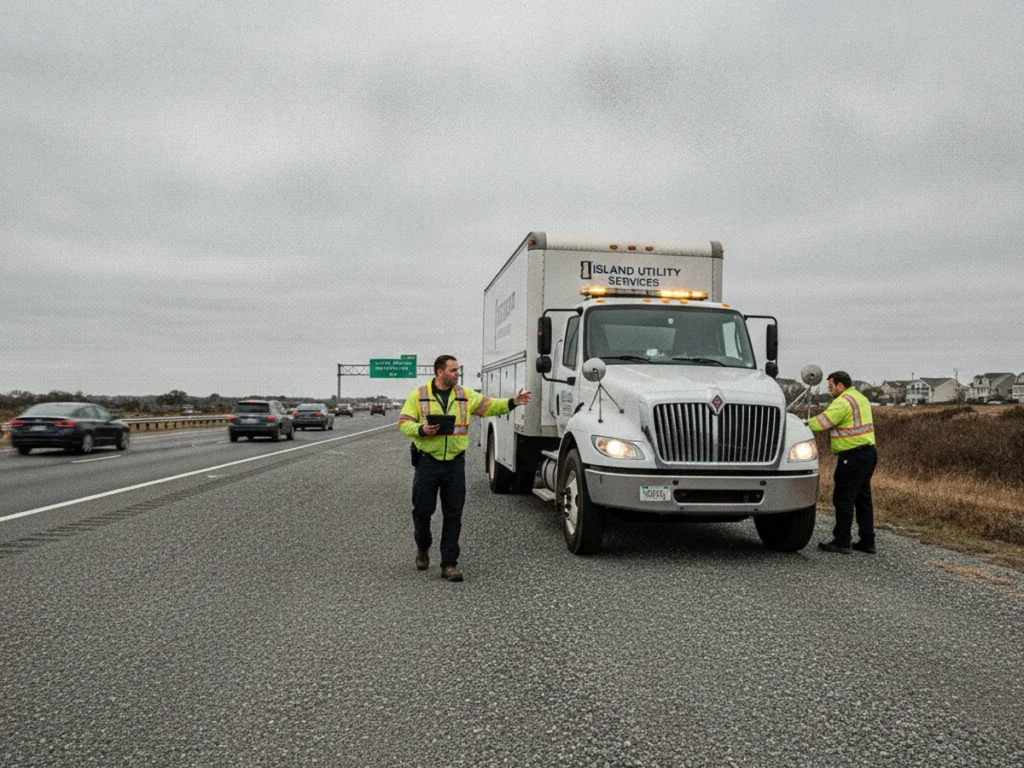
An out-of-service sticker does the same thing to your week as a blown engine. The truck is parked, the route is stuck, and nothing moves until the problem is fixed. The difference is that a failed DOT inspection is almost always preventable, and usually predictable.
Federal and NYS DOT inspections trip up Long Island fleets more than they should. Not because operators cut corners, but because the federal and New York rules layer together in a way that is easy to lose track of. Here is how those requirements actually fit, which ones apply to your trucks, and how to keep an inspection from turning into unplanned downtime.
Federal DOT and New York: two systems that stack on top of each other
Most fleets run into trouble because they treat “the DOT inspection” as one thing. It is really a federal layer and a New York layer, and they cover different ground.
The federal side (FMCSA)
Every commercial motor vehicle needs an annual periodic inspection under 49 CFR 396.17. It covers the safety items in Appendix A, and it produces the inspection sticker on the truck. When that sticker expires, the truck can be placed out of service at the next roadside stop, so the anniversary date matters as much as the work itself.
The inspection has to be done by a qualified inspector under 49 CFR 396.19, which can be a trained in-house mechanic, a third-party service, or a licensed station. The records need to be on file if a carrier is ever audited.
On top of the annual, roadside inspections can happen any time. In New York they are run by State Police and NYSDOT under the federal Motor Carrier Safety Assistance Program, using the CVSA North American Standard levels:
- Level I: the full inspection, driver and vehicle, including under the truck. A clean pass earns a CVSA decal that is generally recognized for about three months.
- Level II: a walk-around covering the driver and everything visible without going under the vehicle.
- Level III: a driver-only check of credentials, medical certificate, hours of service, and seatbelt use.
One useful detail: a passing Level I roadside inspection within the last 12 months can stand in for the annual periodic inspection under 49 CFR 396.23, so a good roadside result is not wasted.
The New York side
New York adds its own registration and inspection requirements. Interstate operators need a USDOT number. Intrastate carriers running vehicles over 10,001 lbs GVWR also need a NY DOT number from NYSDOT.
For the physical inspection, commercial vehicles registered in New York go through the NYS DMV annual safety inspection, and vehicles over 18,000 lbs have to pass a Heavy Vehicle Inspection at a DMV-licensed station.
There is one point of confusion worth clearing up, because it costs fleets time. The NYSDOT semi-annual inspection, the one people hear about that happens every six months, applies mainly to passenger carriers: school buses, vans, ambulettes, and similar vehicles under the state’s Passenger Carrier Safety program. If your fleet is work trucks and vans, that six-month bus program is generally not your recurring trigger. Your recurring obligations are the federal annual periodic inspection, the NYS DMV annual safety inspection, and roadside inspections that can come at any time.
Exact requirements depend on each vehicle’s weight, type, and whether you run interstate or intrastate, so confirm your specific obligations with FMCSA, NYSDOT, and the NY DMV rather than assuming one rule covers the whole fleet.
The diesel emissions piece Long Island fleets forget
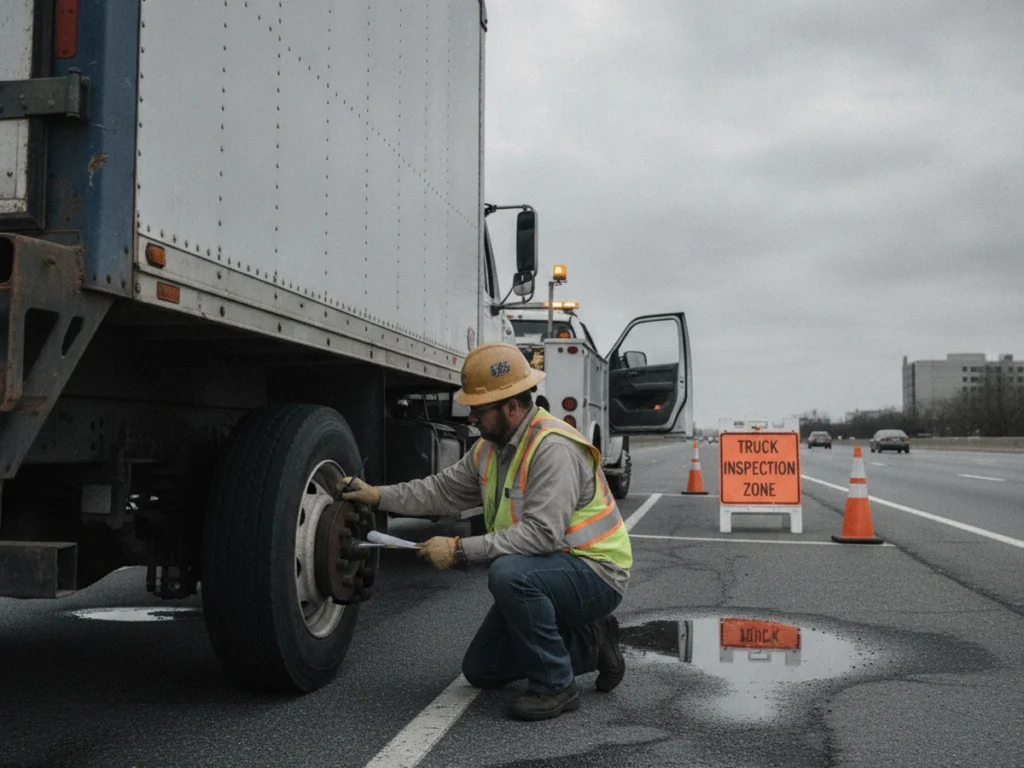
There is a local wrinkle that catches Long Island operators specifically. Diesel vehicles over 8,500 lbs GVWR registered in the New York Metropolitan Area, which includes Nassau and Suffolk, are subject to diesel emissions (opacity) inspection on top of the safety check.
For a fleet running diesel box trucks or work trucks out here, that means the emissions system is part of staying road-legal, not just a fuel-economy concern. A truck that smokes on acceleration or throws a persistent emissions fault is a truck that can fail an inspection, so the aftertreatment system belongs on the same readiness list as brakes and lights.
The violations that actually put a truck out of service
Most inspection failures come from the same short list, and almost all of it is mechanical wear a fleet can catch first. The categories that lead to out-of-service orders, year after year, are:
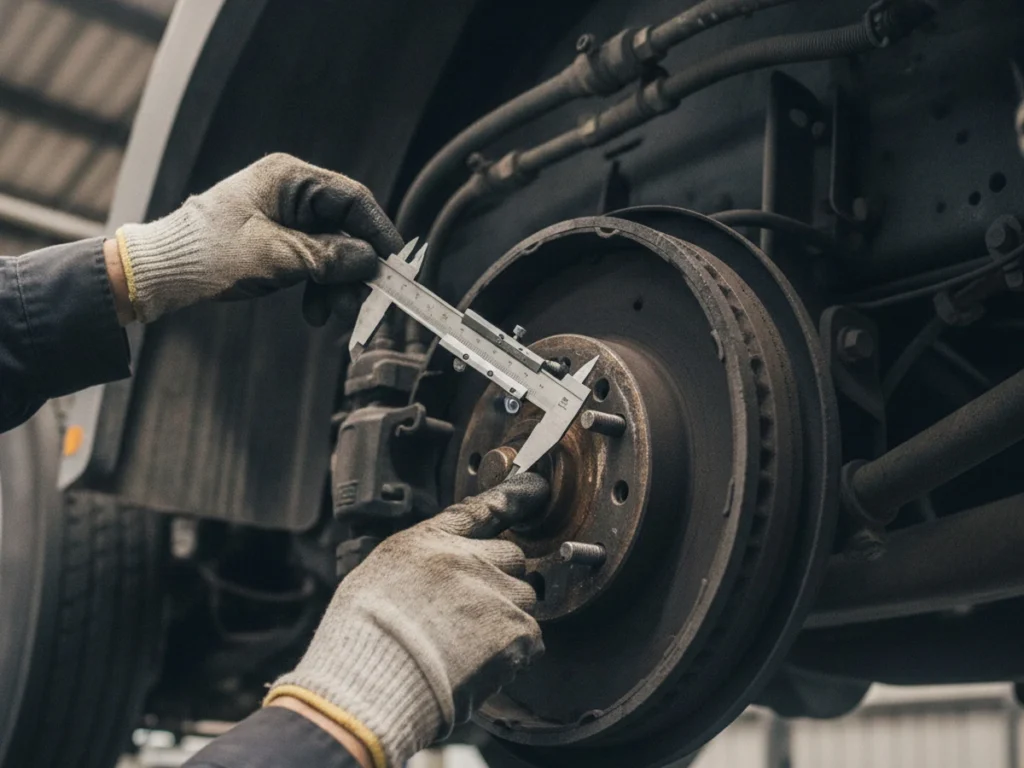
- Brakes: out-of-adjustment brakes and worn components are the single largest source of out-of-service orders.
- Tires: low tread, exposed cord, cuts, and underinflation.
- Lights: inoperative headlights, brake lights, markers, and turn signals.
- Steering and suspension: worn or damaged components, loose parts.
- Cargo securement: missing, loose, or damaged straps, chains, and tie-downs.
The driver side matters just as much. An expired CDL or medical certificate, hours-of-service problems, or missing paperwork can put a driver out of service even when the truck is perfect.
Why Long Island fleets fail on the mechanical items
Here is the uncomfortable overlap. The parts inspectors flag most, brakes, tires, steering, and suspension, are the exact parts that Long Island roads wear out fastest.
Stop-and-go traffic rides the brakes. Potholes and rough pavement hammer tires, steering, and suspension. Short local routes and constant loading and unloading add up faster than the mileage suggests. The same Long Island roads and traffic that age the rest of your fleet are quietly building the defects that turn into out-of-service orders.
That connection is good news, because it means inspection readiness and normal fleet maintenance are the same job. Keep the trucks mechanically sound for the roads they run, and most of the inspection takes care of itself.
How to stay inspection-ready without the last-minute scramble
The fleets that pass without stress are not the ones that prepare the week before. They treat readiness as a standing part of maintenance.
Start with the daily driver walk-around. A driver who reports a soft brake, a dead marker light, or a worn tire that morning gives you the chance to fix a defect before it becomes a violation. Log those reports, because the records matter.
Fix the small stuff fast. A burned-out bulb or an out-of-adjustment brake is a cheap correction in the yard and an expensive one on the roadside. Handling those at your yard with onsite service means a truck does not have to leave the route to stay compliant.
Keep the paperwork current and in the cab: the inspection sticker and report, registration, the driver’s CDL and medical certificate, and recent inspection reports. A clean truck with a messy document folder still slows down a Level II or III check.
Then build the inspection items into your service intervals so nothing depends on memory. A maintenance plan that tracks brakes, tires, lights, and inspection dates per truck turns a compliance deadline into a routine line item.
Timing helps too. Brakes are the top out-of-service category, and enforcement leans into brake checks in late summer heading into fall. September is a sensible month to get brake adjustment, lights, and tires squared away across the fleet before the colder-weather enforcement stretch.
Federal and NYS DOT inspection FAQ
What is the difference between a federal DOT inspection and a NYS inspection?
The federal annual periodic inspection under FMCSA rules verifies the truck’s safety systems and produces the inspection sticker. New York adds its own DMV safety inspection for registered commercial vehicles, a Heavy Vehicle Inspection for vehicles over 18,000 lbs, and diesel emissions testing in the New York Metropolitan Area. Interstate carriers need a USDOT number, and intrastate carriers over 10,001 lbs need a NY DOT number. Most fleets are subject to both the federal and New York layers.
How often does my work truck need a DOT inspection in New York?
For typical work trucks and vans, the recurring requirements are the federal annual periodic inspection and the NYS DMV annual safety inspection, plus roadside inspections that can happen any time. The every-six-months NYSDOT inspection people ask about applies mainly to passenger carriers like school buses and vans, not standard freight or work-truck fleets.
Can a roadside inspection replace my annual inspection?
Yes, in one case. A passing CVSA Level I roadside inspection completed within the last 12 months can substitute for the annual periodic inspection under 49 CFR 396.23. Lower-level roadside checks do not.
What is the most common reason a truck is placed out of service?
Brakes. Out-of-adjustment brakes and worn brake components are consistently the largest single source of out-of-service orders, followed by tires and lighting. All of it is preventable with routine maintenance.
Do diesel work trucks on Long Island need an emissions inspection?
Diesel vehicles over 8,500 lbs GVWR registered in the New York Metropolitan Area, which covers Nassau and Suffolk, are subject to diesel emissions (opacity) inspection in addition to the safety inspection. A smoking or fault-throwing emissions system can fail the check, so it belongs on your readiness list.
The takeaway
A DOT inspection is not really a paperwork event. It is a snapshot of how well your trucks are maintained, taken at a moment you do not get to choose. Fleets that keep brakes, tires, lights, and documents in order year-round rarely think about inspections, because there is nothing to scramble for. The ones that treat it as a deadline are the ones losing a truck and a route to an out-of-service order.
If you are not sure which of your trucks are due, or which are carrying the kind of wear that fails an inspection, a readiness check across the fleet is a straightforward way to find out before an inspector does. On Long Island, that is usually the difference between a scheduled fix and a truck stranded on the shoulder.