

Your odometer tells you how far your trucks have traveled. It doesn’t tell you how hard those miles were.
On Long Island, the miles are hard. Stop-and-go traffic on the LIE, broken pavement on the secondary roads, and a winter that leaves potholes well into June all add up to a specific kind of Long Island commercial vehicle wear that a fleet running clean highway routes never sees. Two trucks with the same mileage can be in completely different shape depending on where they actually run.
For a fleet manager, that gap matters. It’s the difference between a van that makes it to its scheduled service and one that drops a tie rod on Sunrise Highway in the middle of a route.
This is what your local roads are actually doing to your vehicles, and how to stay ahead of it.
Why Long Island commercial vehicle wear looks different
Most maintenance schedules are built around mileage, because mileage is easy to track. The problem is that mileage treats every mile the same, and Long Island miles are not the same.
A delivery van crawling through Nassau County rush hour and a contractor truck pounding over Suffolk’s frost-heaved back roads are aging on two clocks at once: the distance clock your odometer shows, and a wear clock tied to how brutal the route is. The second clock runs faster here than it does almost anywhere a fleet operates.
Two forces drive it. Potholes hit your vehicles in sudden, violent impacts. Traffic wears them down slowly, hour after hour, in ways the mileage number never reflects. Together they age a Long Island fleet faster than the numbers suggest.
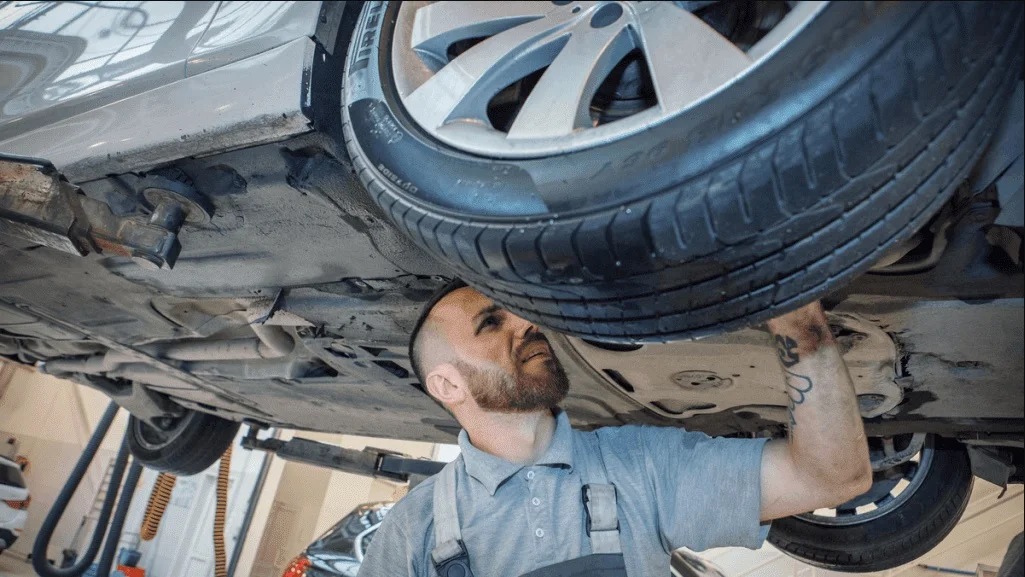
What potholes actually break on a work truck
A pothole strike is a blunt-force event. The bigger problem for a fleet is that work vehicles carry weight. A van loaded with parts, tools, and equipment hits a crater with far more mass behind it than a passenger car, so the damage tends to be worse and reaches deeper into the vehicle.
Here is where the damage usually lands, roughly in the order you’ll feel it:
- Tires and wheels first. Sidewall bulges, slow leaks, cracked or bent rims. Sometimes the tire looks fine and fails a week later when the internal damage finally gives.
- Suspension next. Struts, shocks, control arm bushings, and on heavier trucks the leaf springs. A single hard hit can start a slow failure that shows up later as clunking, a rough ride, or sagging on one corner.
- Steering and alignment. One solid strike can knock the wheels out of alignment. That pulls the truck to one side, chews up tires unevenly, and quietly shortens the life of a pricey set of commercial tires.
- Tie rods and ball joints. The joints that hold your steering and front end together take repeated abuse on bad pavement. When one lets go, the truck is done for the day.
The reason pothole damage is dangerous for a fleet is that a lot of it is invisible at first. The driver keeps running the route. The wear compounds. Then a part fails at the worst possible time, usually mid-shift, usually far from your yard.
What stop-and-go traffic does that potholes don’t
Potholes get the attention because the damage is dramatic. Traffic is the quieter threat, and over a year it may cost you more. Crawling through congestion on the LIE, Northern State, or Hempstead Turnpike puts a fleet under constant low-speed stress:
- Brakes wear far faster. Stop-and-go means thousands more brake applications than a highway route covering the same distance. Pads and rotors on a Long Island delivery fleet simply don’t last as long.
- Transmissions and cooling systems run hot. Repeated acceleration from a dead stop, often with a full load, builds heat. Heat is what kills transmissions and stresses cooling systems over time.
- Idle hours pile up off the books. This is the one most fleets miss. A truck sitting in traffic with the engine running is accumulating engine wear and burning fuel without adding a single mile. Your odometer says the truck is fine. The engine has actually worked a much longer day.
That last point is the heart of it. On Long Island, two identical vans can show the same mileage while one has hundreds more hours of real engine and brake duty behind it. If you schedule maintenance purely on miles, the harder-working truck is the one that surprises you.
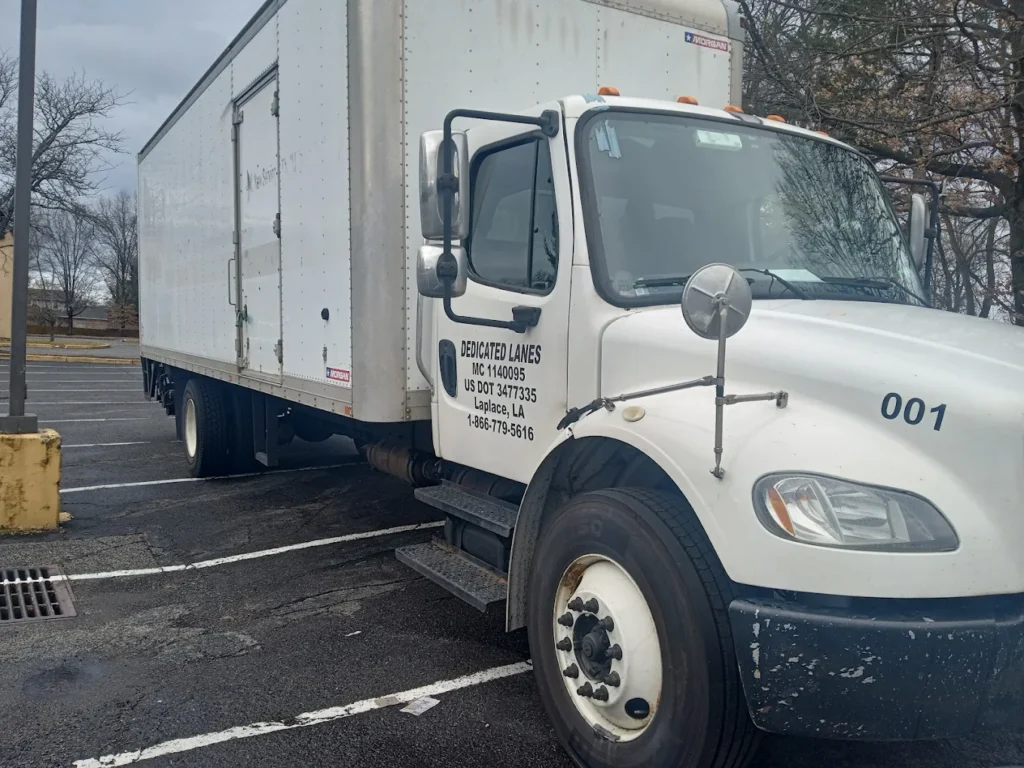
The components that wear first on Long Island routes
If you manage a fleet that runs Nassau and Suffolk daily, these are the parts to watch closely, because local conditions push them hardest:
- Tires (impact damage plus uneven wear from knocked alignment)
- Brakes (stop-and-go duty)
- Suspension and steering components (potholes and rough secondary roads)
- Alignment (drifts out faster on broken pavement)
- Cooling and transmission (traffic heat, especially as summer load climbs)
None of these are exotic. That’s the point. The failures that take a Long Island truck off the road are usually ordinary parts pushed past their life early by the route, not rare mechanical surprises.
What to check after a hard pothole hit
When a driver reports a real impact, don’t wait for the next scheduled service. A quick check the same day catches damage while it’s cheap to fix:
- Tire and rim: look for bulges, cuts, dents in the wheel, and check pressure.
- Steering feel: any new pull, vibration, or off-center wheel after the hit.
- Ride and noise: clunking over bumps or a corner sitting lower than the others.
- Alignment: if anything above is off, get it on a rack before the tires pay for it.
Building this into your driver reporting, so a hard hit triggers a same-day look instead of a shrug, is one of the cheapest ways to prevent a roadside failure later.
Where mobile service changes the math
The reason route wear hurts so much is the downtime, not the repair itself. A worn brake or a knocked alignment is a routine fix. Pulling a truck out of service, getting it to a shop, and waiting for a slot is what actually costs you the day.
This is where onsite, mobile fleet service shifts the equation. Catching pothole and traffic wear early, at your yard or at the job site, means the truck is back on its route instead of sitting in a shop queue across the county. For a fleet whose vehicles run hard local miles every day, that turnaround is the whole game.
The takeaway for fleet operators
Long Island doesn’t wear fleets down evenly, and it doesn’t wear them down at the pace your odometer suggests. Potholes deliver sudden damage you can’t always see, and traffic adds engine, brake, and transmission hours that never show up as miles. A maintenance plan built on mileage alone will always be a step behind your worst routes.
The fix isn’t complicated. Know which units run the hardest local routes, inspect them on the shorter end of your interval, and treat a hard pothole hit as a same-day event, not a someday one.
If you’re not sure how much your routes are quietly costing you in early wear, a maintenance review of your highest-mileage, hardest-route units is a low-effort place to start, and a far cheaper one than the breakdown that’s currently scheduling itself.
FAQ
How do I know if a pothole damaged my work truck?
The first signs are usually a new pull to one side, a vibration through the steering wheel, clunking over bumps, or a tire losing pressure. Some damage is immediate and some shows up days later, so a quick same-day check after a hard hit is worth the few minutes it takes.
Does stop-and-go traffic really wear vehicles faster than highway miles?
Yes. Constant braking, repeated acceleration from a stop, and long idle periods in traffic add brake, transmission, and engine wear that highway cruising doesn’t. Two trucks with identical mileage can be in very different condition if one runs congested local routes.
How often should a Long Island fleet check alignment and suspension?
There’s no single number that fits every fleet, but local road conditions are a reason to lean toward the shorter end of whatever interval you already run, and to check any unit right after a significant pothole impact rather than waiting.
Can a mobile mechanic handle pothole and suspension wear onsite?
Much of it, yes. Tire, brake, alignment checks, and many suspension and steering repairs can be handled at your yard or job site, which keeps the truck out of a shop queue and back on its route faster.
Should pothole season change my maintenance schedule?
It should at least change your attention. Late winter through spring is when impact damage peaks on Long Island, so tightening inspection frequency on your hardest-route vehicles during those months pays off in fewer mid-shift failures.