
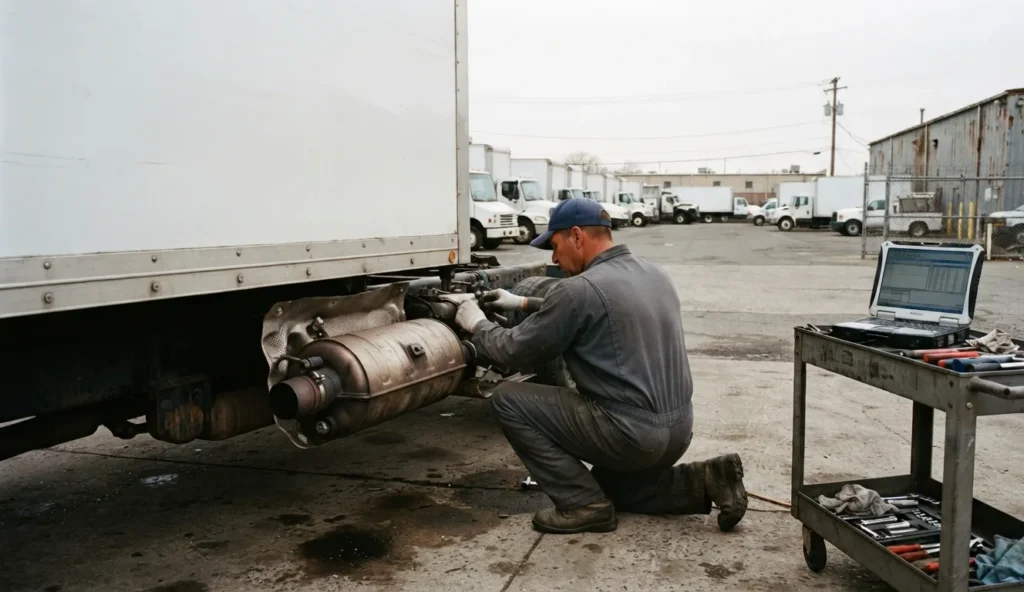
A clogged emissions system rarely fails on a slow day. It fails on the busy one, halfway through a route, when the truck drops into a derate and crawls at 25 mph with a full load behind it. That is usually the moment DPF and DEF cleaning stops being a line item somebody keeps pushing to next quarter.
For diesel fleets running out of Long Island, the aftertreatment system is one of the most common reasons a truck comes off the road, and one of the most preventable. Here is what these two systems do, why local routes wear them out faster than the mileage suggests, and how to plan the cleaning before it plans your day for you.
What DPF and DEF cleaning actually covers
Most people lump the two together, but they are separate systems that fail in different ways.
The DPF (diesel particulate filter) traps soot from the exhaust. The truck burns that soot off on its own through regeneration, but regeneration only handles soot, not the ash left behind. Ash keeps building until airflow drops, the truck runs frequent regens, loses power, and eventually forces a shop cleaning where the filter is pulled, baked or flushed, and reinstalled.
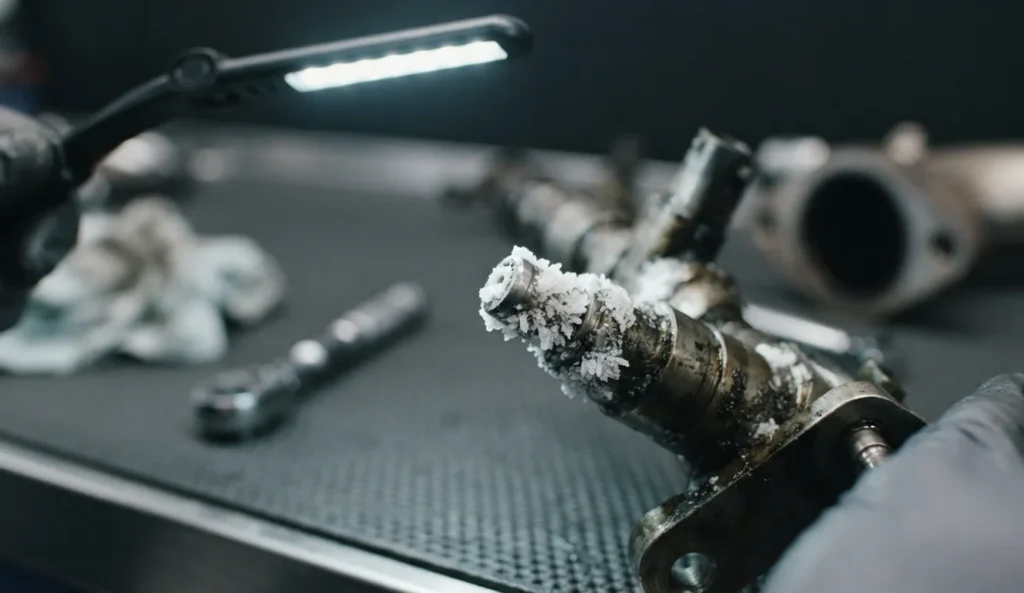
The DEF (diesel exhaust fluid) side works through the SCR system, injecting a urea solution into the exhaust to cut NOx. When DEF sits, gets contaminated, or the system runs hot, the urea crystallizes. Those white crystal deposits clog injectors and lines, trip fault codes, and drop the truck into limp mode the same way a plugged DPF does.
Different systems, same result: a truck that will not run a full shift. Cleaning both on a schedule is cheaper and quieter than replacing either one after it strands a driver.
Why Long Island routes clog these systems faster than the mileage shows
Aftertreatment systems are designed around highway driving, where sustained heat lets the DPF regenerate on its own. Long Island routes rarely give a truck that.
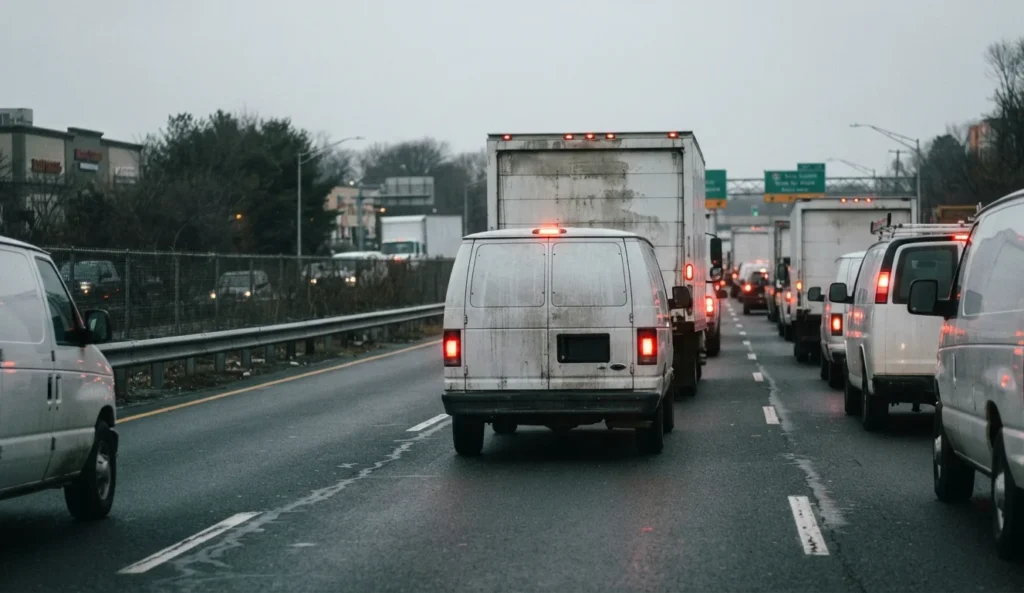
Stop-and-go traffic on the LIE, short hops between job sites in Nassau and Suffolk, long idles at a curb or a loading dock, and constant low-speed crawling all keep exhaust temperatures too low for passive regeneration. Soot loads faster than the truck can burn it off. The engine leans harder on active regens, ash builds quicker, and the DPF reaches a shop cleaning long before the odometer says it should.
DEF systems take a similar hit. Frequent short shutdowns and heat cycling give urea more chances to crystallize around the injector. A fleet running 40,000 stop-and-start local miles can need emissions service sooner than a highway truck at twice the distance. The same Long Island roads and traffic that wear on the rest of your fleet are quietly aging the aftertreatment system too.
The warning signs your fleet is already showing you
A DPF or DEF problem almost always announces itself before it strands a truck. Drivers just tend to report it as “the truck feels tired.” Train them to flag these instead:
- Regeneration cycles running more often than normal, or a regen that never seems to finish
- Noticeable power loss, sluggish acceleration, or a truck stuck in limp mode
- A DPF, check-engine, or DEF warning light that keeps returning after a reset
- White crystal deposits around the DEF tank cap, injector, or lines
- A drop in fuel economy on one specific truck with no route change to explain it
- Repeated aftertreatment fault codes showing up on the diagnostic scan
One of these is a heads-up. Two or three together means the truck is close to a derate, and a derate on a loaded truck mid-route is the expensive version of this problem.
How often fleets actually need DPF and DEF cleaning
There is no single number, and any shop that quotes you one without asking how your trucks run is guessing.
Manufacturer guidance for DPF cleaning commonly lands somewhere between roughly 150,000 and 300,000 miles, with some lighter-duty ranges starting lower. Those figures assume close-to-ideal highway conditions. Local fleets almost never see ideal conditions, so a mileage number on its own is the wrong trigger.
A better approach is condition-based. Service the DPF when the data says to: rising regen frequency, climbing back-pressure readings, or a filter that has not been cleaned in about a year of hard local duty. High-idle and stop-and-go trucks often land closer to an annual cleaning regardless of mileage. DEF systems get inspected on the same visit, with the tank checked for contamination and the injector and lines checked for crystallization.
The point is to let each truck’s own numbers set the interval, then hold to it. That is exactly the kind of trigger a structured fleet maintenance plan is built to track, so no truck quietly drifts past its cleaning window.
The downtime costs more than the cleaning
The cleaning itself is a known, manageable cost. The number that actually hurts is what a stranded truck costs while it waits.
A planned cleaning is a scheduled slot. You pick the day, the truck is down for a set window, the route is covered, and the truck is back. A roadside derate is the opposite: an unplanned failure, a driver stuck, a route running late, and often a tow before anyone even touches the filter. Same repair, very different cost, and the difference is entirely about whether you saw it coming.
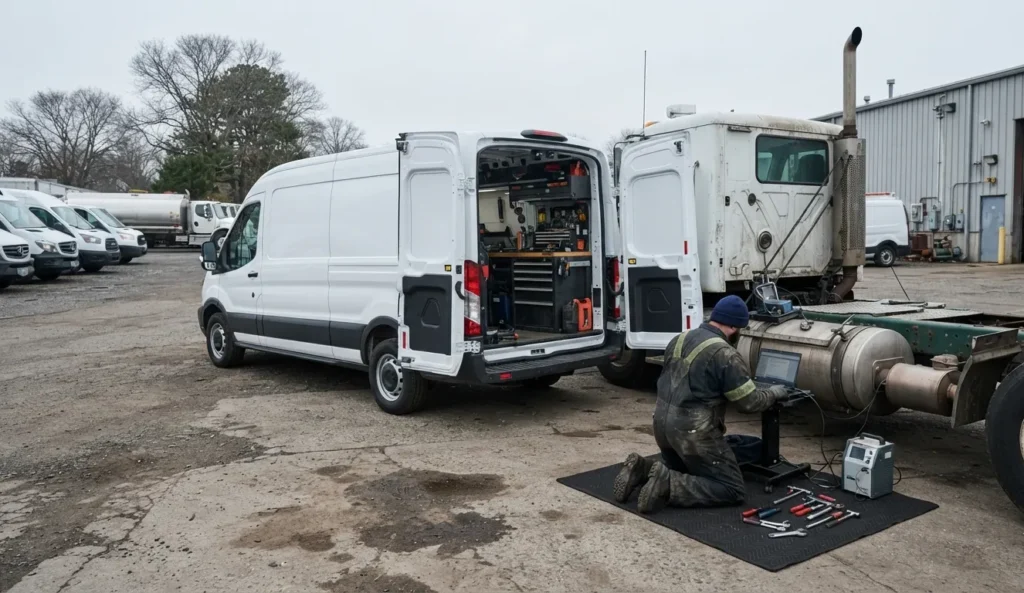
This is where onsite service changes the math. When emissions work happens at your yard instead of a distant shop, you are not stacking a tow and a lost day on top of the cleaning. The truck is serviced where it parks, on a schedule you set, and back in rotation faster. For a fleet that lives and dies by route coverage, planning the clean instead of reacting to the derate is the whole difference.
Building emissions service into your maintenance schedule
Emissions service works best as a standing part of the maintenance calendar, not a fire drill.
Start by logging regen frequency and fault codes per truck, so you can see which units are trending toward a cleaning. Fold a DPF and DEF check into the same intervals you already run for oil and brakes, so nothing needs a separate reminder. Keep an eye on DEF quality and storage, because contaminated or old fluid is a common and avoidable cause of SCR faults. And prioritize the trucks doing the most stop-and-go local work, since those are the ones aging fastest.
None of this is complicated. It just has to be written down and owned by someone, or it slips until a warning light forces the issue.
DPF and DEF cleaning FAQ
How do I know if my truck needs a DPF cleaning or a full replacement?
Cleaning restores a filter that is loaded with soot and ash but still structurally sound, which covers most cases. Replacement is only necessary when the filter is cracked, melted, or physically damaged. A proper diagnostic before any work tells you which one you are actually dealing with, so you are not paying to replace a filter a cleaning would have fixed.
Can I just keep forcing regens instead of cleaning the DPF?
Only for a while. Forced regens burn off soot, not ash, and ash is what eventually plugs the filter. A truck that needs constant regens is telling you the DPF is near the end of what regeneration can do and is due for a real cleaning.
Is DEF cleaning the same as topping off the DEF tank?
No. Refilling keeps the system supplied. DEF cleaning deals with crystallization and contamination in the injector, lines, and SCR components, which refilling does nothing for. A truck can sit with a full tank and still throw SCR faults from crystal buildup.
How long is a truck down for DPF and DEF service?
A planned cleaning is usually a matter of hours, not days, especially when it is scheduled and done onsite. The long delays people associate with this work almost always come from unplanned failures, towing, and waiting for a shop slot, which is exactly what scheduling it avoids.
Does short-route local driving really affect emissions systems?
Yes, more than most managers expect. Short trips and heavy idling keep the exhaust too cool for the DPF to regenerate on its own, so soot builds faster and DEF gets more chances to crystallize. Local Long Island fleets often need emissions service sooner than the mileage would suggest.
The takeaway
The fleets that stay ahead of DPF and DEF cleaning are not spending more on their trucks. They are spending it on their own schedule instead of on a tow truck and a blown route. Emissions service is not the exciting part of running a fleet, but it is one of the clearest lines between a truck that finishes its shift and one that does not.
If you are not sure which of your trucks are trending toward a cleaning, that is the place to start. A quick emissions review across the fleet turns a surprise derate into a planned slot, and for a Long Island operation that runs on route coverage, that is a trade worth making.